
What Youll Learn

As an exercise professional, there are two things that clients typically come to you for – to look and feel better. This immersive online experience shows you how to apply the most up-to-date evidence-based information on exercise, nutrition, and behavior change to help clients reach their health goals and lose weight as part of the process.

Thanks to our online experience, you’ll learn evidence-based nutrition, exercise and behavior change strategies to help clients lose weight and keep it off.

By designing weight-loss exercise programs that leverage the most up-to-date weight loss guidelines and methodologies, you'll help make it easier for clients to incorporate effective exercise into their daily routines.

Unlike other methods, NASM-WLS teaches a systematic approach to leading a healthier lifestyle that, in turn, leads to weight loss. This process takes into account the real barriers that clients face and equips them with the skills needed to overcome them.By designing weight-loss exercise programs that leverage the most up-to-date weight loss guidelines and methodologies, you'll help make it easier for clients to incorporate effective exercise into their daily routines.

Unlike other methods, NASM-WLS teaches a systematic approach to leading a healthier lifestyle that, in turn, leads to weight loss. This process takes into account the real barriers that clients face and equips them with the skills needed to overcome them.

Revolutionary Digital Learning Platform

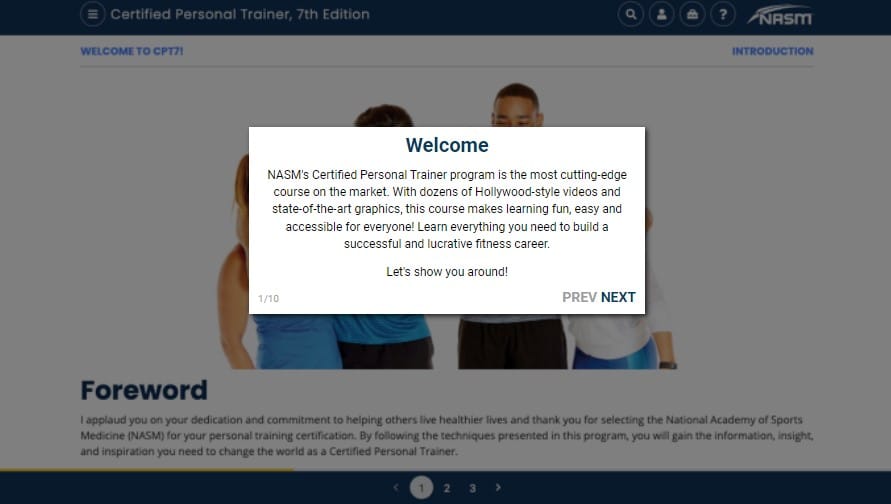
With our interactive learning platform, you’ll have all the resources you need to study NASM’s weight loss expertise anytime, anywhere. Take a quick tour below to get a firsthand look at the tools and features of this revolutionary platform.

Curriculum

Chapter 1: Introduction Review the course structure, program objectives, and meet the client faces that will be used as case studies throughout the course.
Chapter 2: Scope of Practice This chapter provides an overview of the health care landscape and describes where a weight loss specialist fits on the health care continuum. Develop an understanding of how to better serve your customers while ensuring you are following best practices.

Chapter 3: The state of obesity
Understand the impact of obesity and how it affects society and ultimately clients. Learn the main causes of obesity and how clients can become obese. This information is important for clients to understand, at a fundamental level, how the underlying factors of obesity can be addressed by a weight loss specialist.

Chapter 4: The physiology of obesity.
Learn what changes occur in the body due to obesity and how this can affect health and physical properties of the body, including organ systems, hormones, metabolism and neurobiology. All of these aspects can affect how people with obesity respond to exercise.

Chapter 5: Psychosocial Approach to Obesity
This chapter will discuss three critical areas of the psychosocial components of obesity: mental health, social influences, and eating disorders. Learn about self-esteem and body image and how to empathize with your clients about these aspects of mental health. The social influences and social determinants of obesity will be analyzed in depth and possible solutions to address these issues will be provided.

Chapter 6: Metabolism
Understand metabolism and how it relates to obesity, including energy balance and energy needs, and the role of environment and genetics. Learn about the basic theories of what causes obesity from a metabolic perspective and how a weight loss specialist can put these theories into practice and provide solutions to clients who are struggling to lose weight.

Chapter 7: Nutrition and Supplements.
Understand diet, supplements and nutrition as they relate to obesity. Popular dietary regimens and archetypes have been used to treat obesity for decades. Consider these diets in detail, as well as their effectiveness and usefulness.

Chapter 8: The Impact of Exercise on Weight Loss
It is often considered as one of the crucial ingredients for weight loss. However, exactly how it affects weight loss is often misunderstood. This chapter will provide an in-depth review of how exercise affects weight loss from a calorie expenditure perspective, a metabolic perspective, a health perspective, and the effects of exercise on mental health.

Chapter 9: Psychology of Weight Loss
The psychological effects of weight loss are just as important as the physical ones. This chapter will review five key components of weight loss psychology: coping, nutrition, willpower, attachment, and ambivalence.

Chapter 10: The process of onboarding new customers
A critical ingredient to achieving success as a weight loss specialist is developing a clear, consistent and thorough onboarding process for new clients. People who need weight loss have specific needs when it comes to assessment. This chapter will review the fundamental components of developing a proper onboarding process and provide a set of powerful tools for weight loss professionals.

Chapter 11: Conducting Fitness Assessments
Understanding a client's readiness and fitness is imperative for weight loss specialists. These assessments and tests (such as calorie counting for weight goals) help the weight loss specialist understand a client's current situation and determine where the appropriate starting point is using a systematic approach.

Chapter 12: Dietary Guidance Strategies for Weight Loss
Learn how to create a weight loss plan, how to use strategies to increase program adherence, and how to implement various assessment tools to make modifications during the plan to ensure continued success for the client. Learn relevant behavior change models that have been proven in research to be effective.

Chapter 13: Fitness Training Strategies for Weight Loss.
Understand how exercise differs for the individual client, how intensity can affect overall energy expenditure through the limited energy model, and the role of NEAT in fitness training and weight loss.

Chapter 14: Integrating Nutrition and Fitness with Client Weight Loss
Coaching clients' diet and fitness goals for weight loss is often part of a comprehensive plan. This chapter will use client personas to help you learn how to integrate the nutrition and fitness plans developed for a client. This chapter will provide a simple, defined process for how to set up, implement, and evaluate a comprehensive program for a client.

Chapter 15: Sustainability and weight maintenance
Sustainability and setting clients up for long-term success is one of the most important aspects for a weight loss specialist to consider. This chapter will look at key aspects of how to ensure that clients get sustainable results.

After completing the courses, you will take an online final exam. The exams consist of 100 questions. Each question will be multiple choice. The exam is timed and cannot exceed 90 minutes. To pass, you need a score of 70% or better. Don't worry though, if you score below that you have up to 3 tries.

What's Included

- High-End, Easy-to-Use Digital Course Portal; Access on all Devices
With our interactive learning platform, you'll have all the resources you need to study for NASM's Weight Loss Specialization anytime, anywhere.

- 15 In-Depth Chapters and Corresponding Chapter Quizzes

- Four Client Personal Journeys to Serve as Case Studies

  • Steve - 30s; BMI 40-42; Understands exercise but not nutrition
  • Angela - 40s; BMI 31; Doesn't exercise; has tried various diets in the past
  • Jose - 40s; BMI 52; No history with exercising; Hypertension and pre-diabetes
  • Vanessa - 40s; BMI 28; Not consistent with exercise; travels a lot for work; needs help with habits surrounding food intake

- 13 Course Videos

  • Introduction to WLS
  • Persona Introductions
  • Scope: Coaching vs. Counseling
  • The Growing Importance for WLS
  • Psychosocial Effects on Obesity
  • Popular Diets for the WLS
  • Physical Activities that Promote Weight Loss
  • 5 Factors to Weight Loss Success
  • Nutrition Intervention Strategies
  • The 5 A’s of Coaching Framework
  • Factors that Impact Weight Maintenance and Sustainability

- 4 Complete Coaching Process Videos with Workout Demonstrations for personas

  • Treats weight loss, not as the problem to overcome, but instead, the behavioral strategies required working an array of different weight loss clients

- 2 Animation Videos

  • The Physiology of Obesity
  • Metabolism

- 30+ Downloads and Templates That Can Be Used Directly with Weight Loss Client

- Up to 15 Custom Graphics and Infographics per Chapter

Why become Weight Loss Specialist?

– You will learn the art of designing programs that address a range of behavior change objectives

– You’ll become an expert at avoiding weight loss obstacles

– You will help clients anticipate and avoid weight loss obstacles

– You will define and explain key points to clients

– You will gain the ability to explain food cycles and the effects of dieting

– You will learn how to create unique programs designed for specific client needs

WANNA LEARN MORE?